From The Coastside Pawty Crew — grey muzzles, golden hearts, and everything we’ve learned about loving the old souls.
Old dogs are the very best dogs. They’ve traded zoomies for naps in sunbeams, but they still light up for a walk, a treat, and a soft spot on the couch. This week, all seven of us are teaming up to share what actually helps a senior dog feel great — each of us covering the part we know best.
Key takeaways
- A dog counts as a “senior” in the last quarter of their expected life — about 8–11 years for small dogs, 8–10 for medium, 8–9 for large, and 6–7 for giant breeds.
- Senior dogs should see the vet about every 6 months, with bloodwork every 6–12 months, so small problems get caught while they’re still small.
- Keep them lean, keep them moving gently, keep their brains busy, and keep their beds warm.
- Watch for small changes — stiffness after rest, new lumps, drinking more, sleeping differently — and tell your vet early.
Little Foot here — health first, always
Hi, I’m Little Foot, and everyday health is my whole job. Here’s the first thing to know: “senior” isn’t one magic birthday. Vets call a dog a senior in the last 25% of their expected life, so a little dog like me might not be a senior until 10 or 11, while a giant friend can be one at 6 or 7. Once your dog is there, ask your vet about checkups about every six months — a year is a long time in dog years, and bloodwork every 6 to 12 months catches kidney, liver, and thyroid changes early. At home, I do a monthly once-over: run your hands along their body, feel for new lumps, watch their weight, appetite, thirst, and sleep. Old age itself isn’t a disease — a change is a conversation with your vet. And please, never give human pain medicine like ibuprofen. It’s toxic to dogs. If your old friend seems sore, your vet has safe options.
Kayla here — the brush is my love language
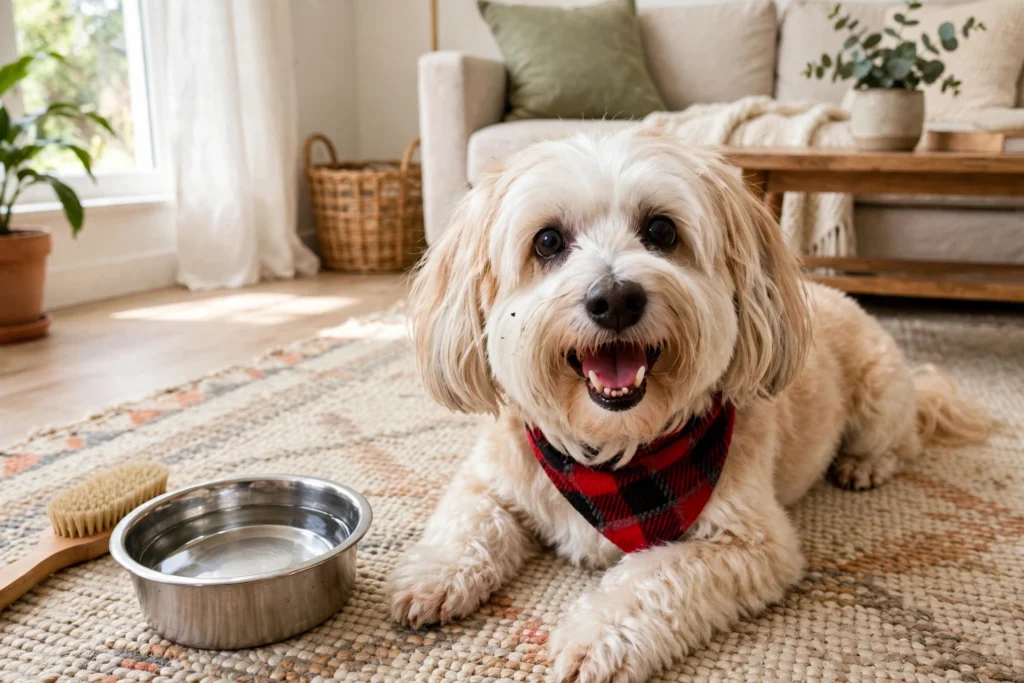
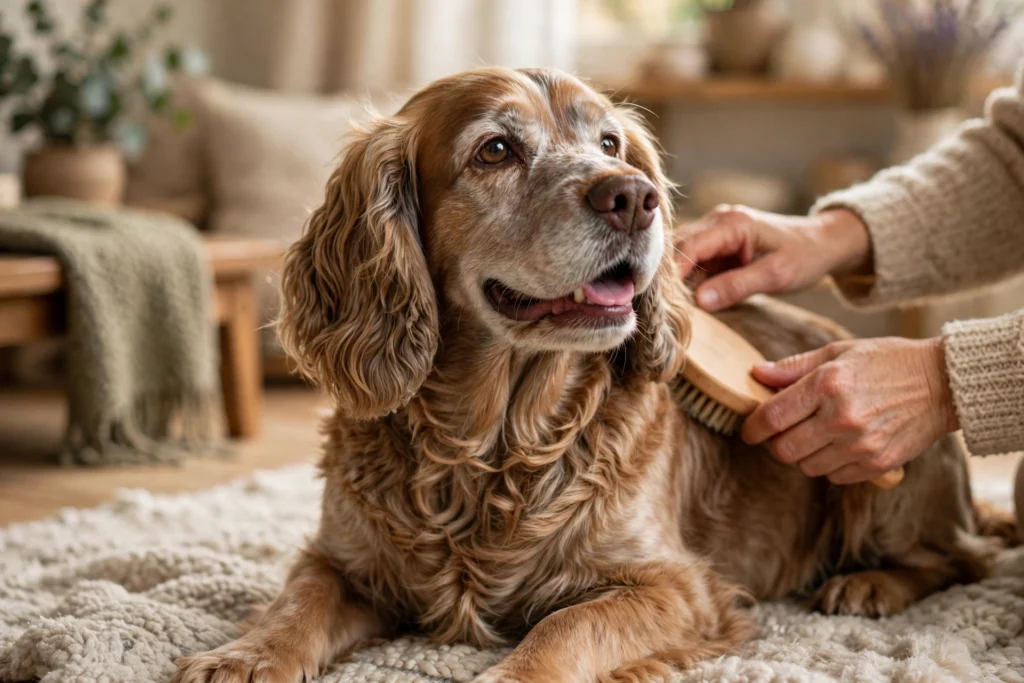
Kayla here, and I take coat care very seriously. Senior coats get thinner and skin gets more delicate, so I say: softer brush, slower strokes, and turn grooming into a cuddle. While you brush, you’re also doing a health check — feeling for lumps, dry patches, or sore spots your eyes might miss. Senior nails grow longer because we walk less, so keep them trimmed, and go easy around stiff joints. After a damp coastal walk, dry us off properly — a warm towel rub keeps an old body from getting chilled. A good brush-out isn’t just about looking pretty. It’s ten quiet minutes of love, and we feel every bit of it.
Paris here — dinner still matters, maybe more
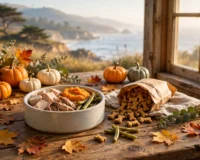
Paris here, and I have opinions about food. As dogs age, our metabolism slows down — around 15 to 20% — so most seniors need fewer calories. But we still need high-quality protein to protect our muscles, and omega-3s from fish are wonderful for joints and brains. Ask your vet before switching to a senior recipe, and try two or three smaller meals a day instead of one big one. A raised food and water bowl is a kindness for a stiff neck, and fresh water should always be close by. Good food won’t turn back the clock, but it makes every golden year taste better.
Arie here — treats should be soft on old teeth
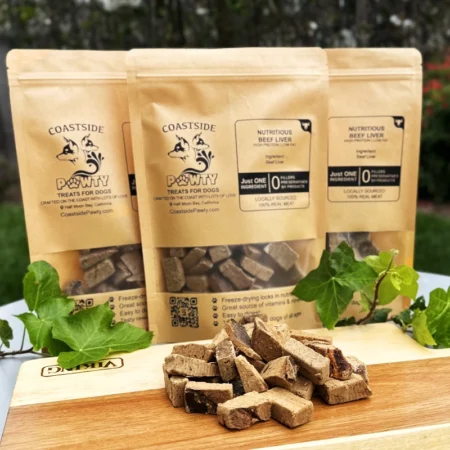
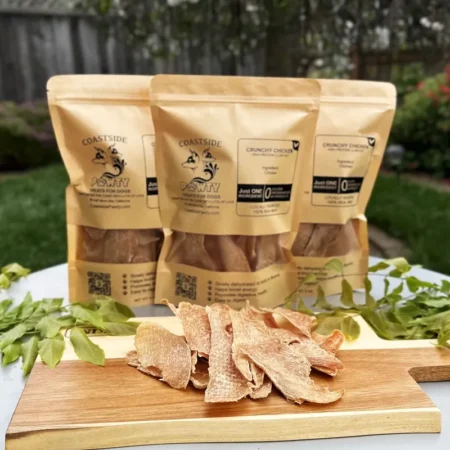
Arie here, and treats are my department, so listen up: old teeth deserve soft treats. My pick this week is Nutritious Beef Liver — it’s freeze-dried, 100% beef liver, and it breaks apart easily, so you can crumble it into little pieces for a senior mouth. One ingredient, nothing weird, and it smells like heaven to us. Break pieces small, and count treats toward the day’s calories — a few tiny rewards beat one giant biscuit. Skip rock-hard chews that can crack an old tooth, and save the crunchy stuff for the youngsters. A soft treat, given slowly, is the best kind of “I love you.”
Mickey here — old dogs CAN learn new tricks
Mickey here, and I refuse to accept that old dogs can’t learn. We absolutely can — we just like shorter lessons and bigger applause. Keep training sessions quick and happy, five minutes of easy wins beats twenty minutes of frustration. Nose games are my favorite: hide treats around the room and let your senior sniff them out — sniffing is a workout for the brain. Puzzle feeders count too. Be patient if hearing or vision fades; use hand signals, don’t sneak up from behind, and always let us know you’re there. A brain that gets to play stays young longer, and honestly, we love earning a treat at any age.
Wolfie here — the coast, at a golden oldie’s pace
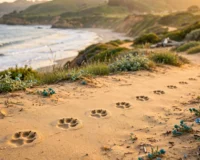
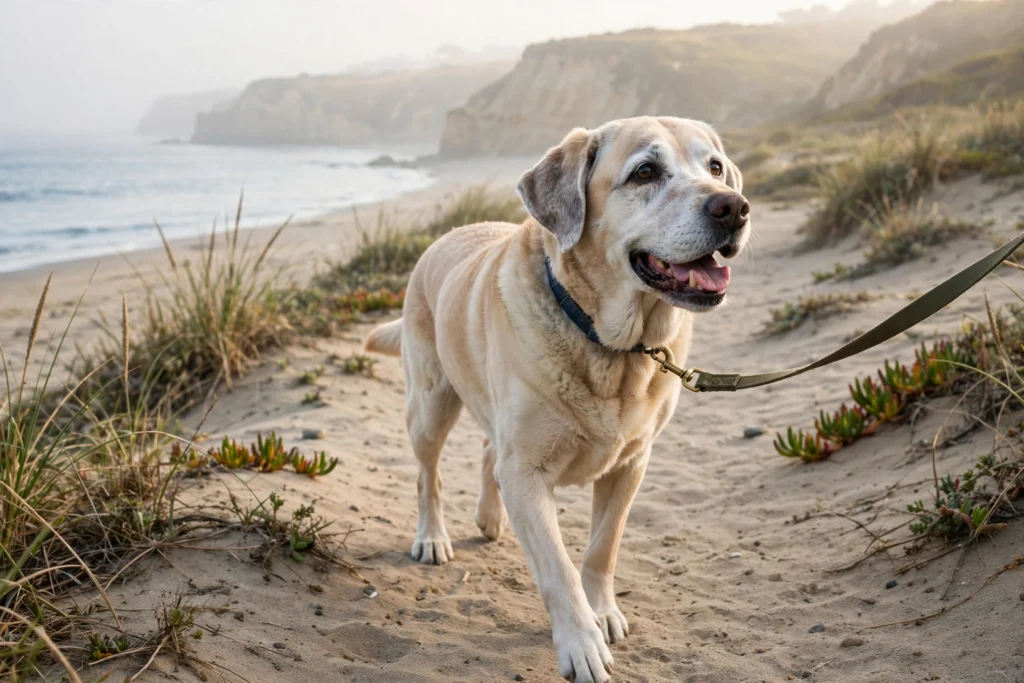
Wolfie here, and the coast is still my favorite place on earth — I just take it slower now. Shorter, flatter walks beat one long hike: soft sand is kinder on old joints than hard pavement, and stopping to sniff every single bush counts as exercise, trust me. My favorite gentle stroll is the flat stretch at Poplar Beach — easy going, ocean air, and plenty of good smells. Bring water, take rest breaks in the shade, and let your senior set the pace. Check before you go — tides and beach rules can change — and if your old friend is tired, the car ride home with the window down is a perfectly good adventure too.
Tiny here — small dogs feel the cold first
Tiny here, and I’m the littlest member of the Crew, so I know about being cold. Small and thin-coated seniors lose heat fast, so a warm orthopedic bed in a draft-free corner is worth its weight in gold. A cozy sweater on chilly mornings isn’t silly — it’s smart. Around the house, lay down non-slip rugs on slick floors, because one slip can shake an old dog’s confidence for weeks. A ramp or a little step beats asking stiff hips to jump onto the bed or into the car. And a soft night light helps cloudy old eyes find the water bowl at 2 a.m. Warm, steady, and safe — that’s the whole secret.
Frequently asked questions
Q: When is my dog considered a senior?
A: In the last 25% of their expected lifespan, according to the AAHA. Roughly 8–11 years for small dogs, 8–10 for medium, 8–9 for large, and 6–7 for giant breeds. Your vet can tell you where your dog falls.
Q: How often should a senior dog see the vet?
A: About every 6 months, with bloodwork and urinalysis every 6–12 months. Dogs age faster than we do, so twice-yearly visits catch changes early.
Q: What are the first signs of arthritis?
A: Stiffness after rest, slow rising, hesitation at stairs or jumping, and lagging behind on walks. Roughly 1 in 5 adult dogs develops arthritis — if you spot the signs, talk to your vet about pain relief and joint care.
Q: What treats are best for a senior dog?
A: Soft, easy-to-chew, single-ingredient treats you can break into small pieces — like freeze-dried beef liver. Count them toward daily calories and skip hard chews that can crack old teeth.
Q: Can old dogs still learn new things?
A: Yes! Short, gentle training sessions, nose games, and puzzle feeders keep a senior brain busy and happy. Go at their pace and celebrate every win.